 The COSMO (COSmic Monopole
Observer) experiment : Science
The COSMO (COSmic Monopole
Observer) experiment : ScienceThis means that the hot, early universe (the primeval fireball) was in good thermal equilibrium, due to the continuous scattering of photons against free electrons. The temperature of the CMB black-body is 2.725K, as measured by the FIRAS instrument on the COBE satellite.

The target of COSMO is the detection of these deviations. These are very small (< 0.01%) but include important information on the very early, early and late universe (depending on which physical phenomenon affected the distribution of photons, and when): a wealth of cosmological information still to be harvested (see e.g. J. Chluba, R. A. Sunyaev, MNRAS (2012) 419 1294 for complete information, and figure 4).
Figure 3: Expected
deviation from a perfect blackbody: y distortion,
due to all the ionized matter present on the line of
sight, from here to recombination (y=1.8x10⁻⁶):
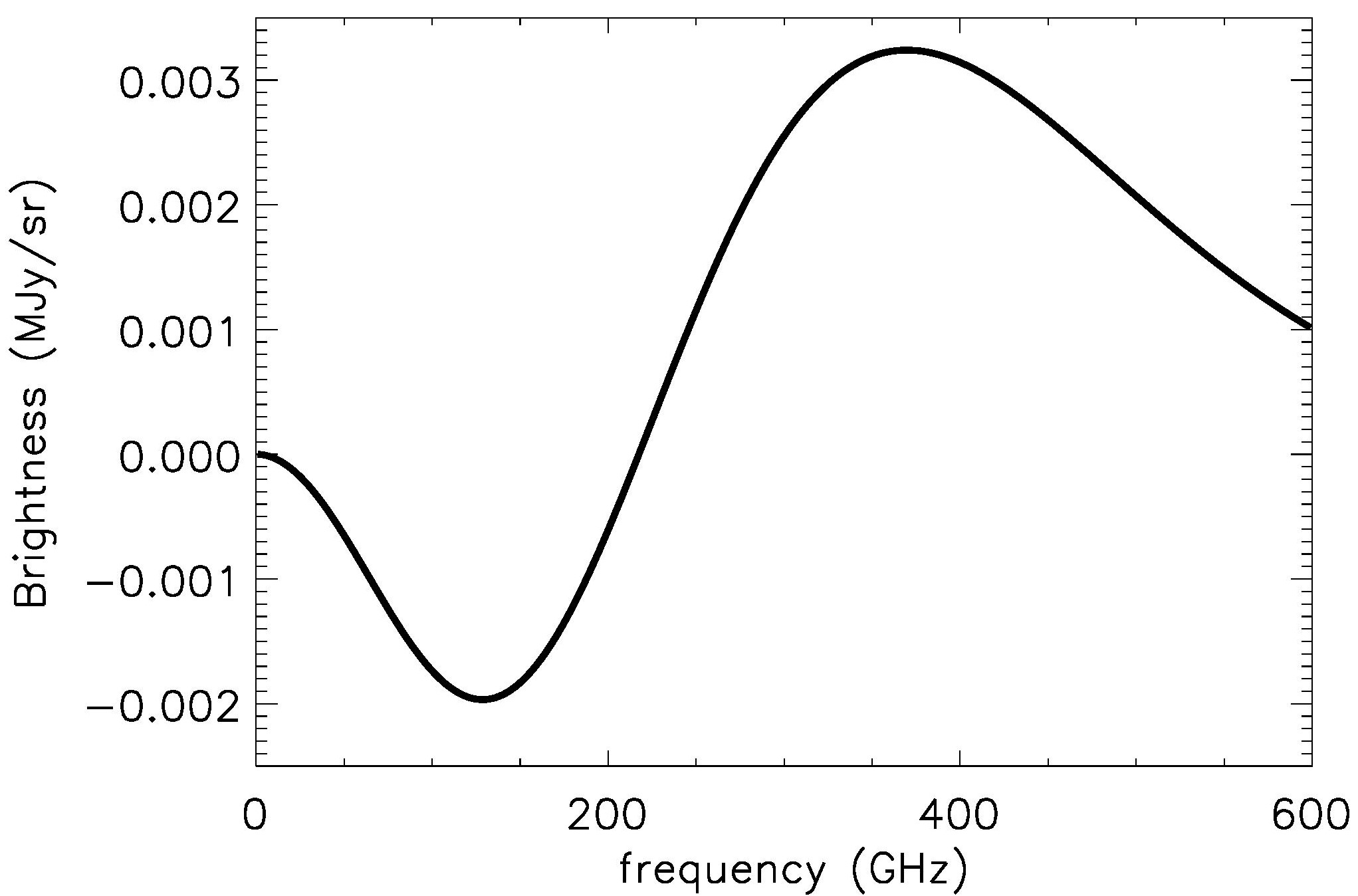
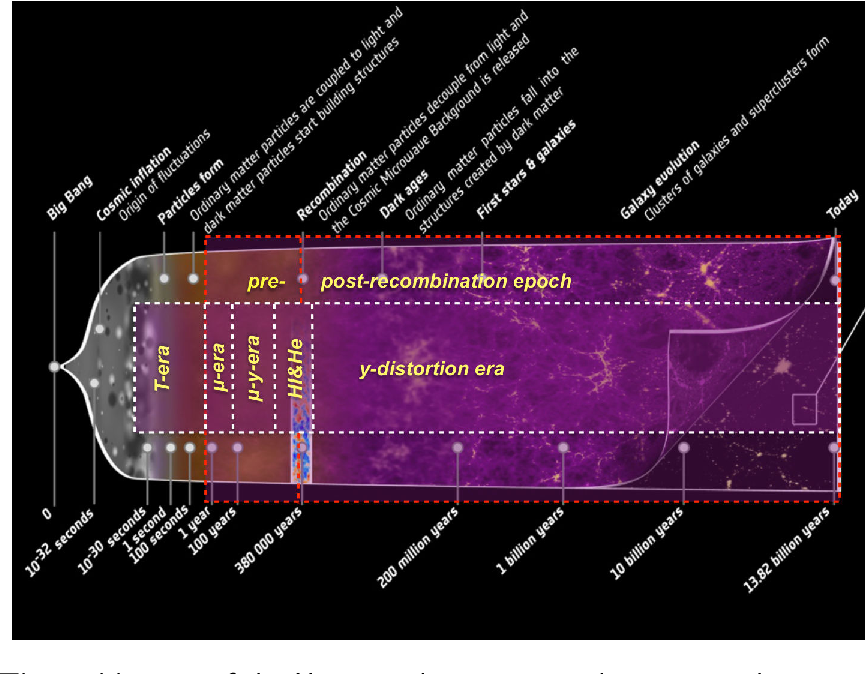 Figure 4: reproduced from Jens Chluba. Science with CMB spectral
distortions. In Proceedings, 49th Rencontres de Moriond on
Cosmology: La Thuile, Italy, March 15-22, 2014, pages
327–334, 2014
Figure 4: reproduced from Jens Chluba. Science with CMB spectral
distortions. In Proceedings, 49th Rencontres de Moriond on
Cosmology: La Thuile, Italy, March 15-22, 2014, pages
327–334, 2014